7 Best Warehouse Automation Trends for the Future?

Time:2026-10-08 Author:Charlotte
0%

Warehouse automation is moving from isolated machines toward connected, adaptive operations. The question is no longer whether warehouses will automate. It is what is the future of warehouse automation, and how responsibly companies should build it.

René de Koster, a leading warehouse automation researcher, captures the direction clearly: “The warehouse of the future will be a combination of people and robots.” His view reflects real operating conditions. Workers still handle exceptions, fragile products, maintenance decisions, and customer priorities. Meanwhile, robots can move totes across polished floors, software can predict replenishment, and cameras can identify damaged cartons within seconds.

This article examines seven warehouse automation trends shaping that transition. These include artificial intelligence, autonomous mobile robots, goods-to-person systems, computer vision, warehouse digital twins, integrated orchestration software, and energy-efficient automation. Each trend promises measurable gains, such as shorter travel distances, fewer picking errors, and faster order fulfillment.

The benefits are not automatic.

A poorly planned system can create expensive bottlenecks. For example, a robot fleet may move quickly, while packing stations remain understaffed. Data quality can also weaken otherwise impressive algorithms. These practical gaps deserve attention.

Reliable automation begins with evidence. Managers should compare throughput, accuracy, labor safety, maintenance time, and total ownership costs. Pilot projects can reveal problems before full deployment. Employee feedback matters too. They often notice awkward workflows before dashboards do.

The future will not look identical everywhere. A small regional warehouse may need flexible robots, not a massive fixed system. That uncertainty makes thoughtful adoption more valuable than dramatic promises.
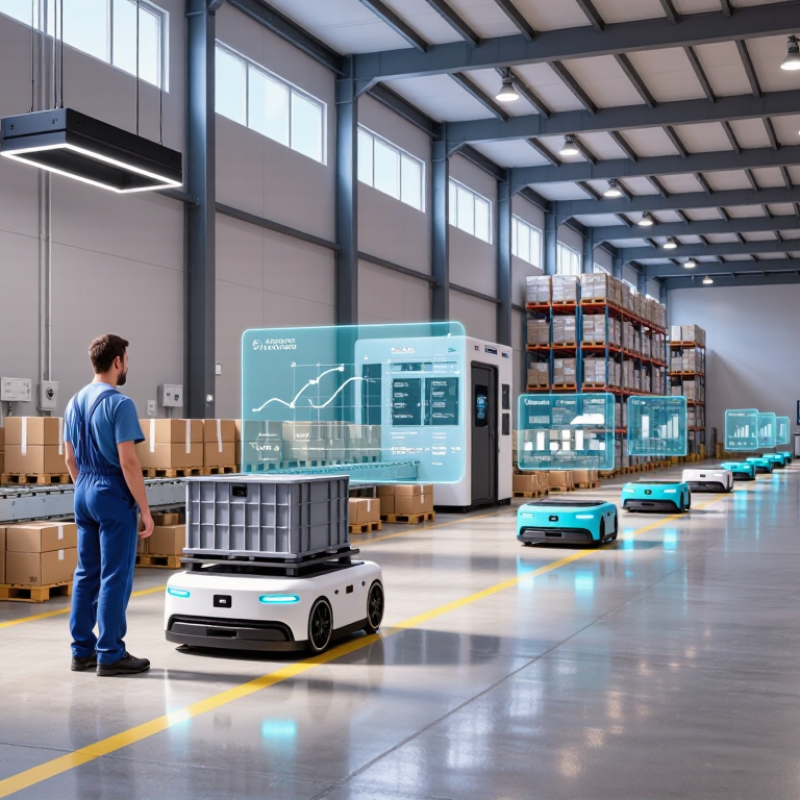
7 Best Warehouse Automation Trends for the Future?

Warehouse Automation: Definition, Scope, and Future Development

Warehouse automation is the coordinated use of software, machines, sensors, and human decisions. It supports receiving, storage, picking, packing, and shipping. The scope now extends beyond moving boxes. It includes inventory visibility, workplace safety, energy control, and data-based planning. In practical warehouse assessments, the best systems fit existing workflows instead of replacing every task.

Seven trends are shaping future development: autonomous mobile robots, automated storage and retrieval, computer vision, smart conveyor systems, robotic picking, predictive maintenance, and cloud-based warehouse management. These tools can reduce walking time and improve stock accuracy. Sensors may detect a damaged carton before shipment. Vision systems can also identify empty locations or misplaced goods. However, automation still depends on clean data, stable networks, and careful maintenance.

Human oversight remains essential. Workers handle exceptions, unusual products, and decisions that software cannot judge reliably. A rushed installation may create expensive bottlenecks. I have found that simple automation often delivers more value than impressive equipment. That view may be incomplete. Newer artificial intelligence tools could change the balance quickly. Warehouses should test systems in limited zones, measure error rates, and train staff before wider deployment. A quiet warning light, a delayed scan, or one repeated picking error can reveal weaknesses that dashboards miss.

Artificial Intelligence and Machine Learning in Warehouse Operations

Among the seven warehouse trends, artificial intelligence and machine learning deserve close attention. They can forecast demand, detect damaged cartons, and assign picking tasks in real time. The World Economic Forum’s Future of Jobs Report 2023 found that 75% of surveyed companies expected to adopt AI by 2027. In warehouses, that ambition becomes practical through scans, order histories, and replenishment delays. Yet data is often incomplete. One missed scan can distort tomorrow’s forecast.

Machine learning can flag unusual inventory movements before supervisors see empty shelf locations. Computer vision can check labels, pallet positions, and package damage beside a conveyor. Gartner predicted that 50% of new warehouse automation deployments could use AI-enabled robots by 2028. Still, automation needs human review. Workers understand exceptions that historical data cannot explain, such as a local promotion or a blocked aisle. Poor training can also amplify errors. That is not a futuristic failure. It is a Tuesday morning problem.

Tips:

Begin with one measurable use case, such as reducing mis-picks by 10%. Clean location data weekly. Test predictions against actual counts. Keep a manual override visible. Track accuracy, worker feedback, energy use, and safety incidents. Review models after seasonal peaks. A fast system is not always a good system; one wrong recommendation can move hundreds of cartons before anyone notices.

Robotics, Autonomous Vehicles, and Automated Storage Systems

7 Best Warehouse Automation Trends for the Future?

Robotics are moving beyond simple picking tasks. The International Federation of Robotics reported 541,302 industrial robots installed worldwide in 2023. In warehouses, robotic arms can sort cartons, build pallets, and handle repetitive transfers. A worker may still supervise exceptions beside a crowded conveyor. That human-machine boundary remains imperfect.

Autonomous vehicles are becoming more practical inside distribution centers. Autonomous mobile vehicles can carry totes between storage aisles and packing stations. The 2024 Material Handling Industry annual report found that 55% of surveyed organizations planned to increase technology investment. This supports wider vehicle adoption, especially where labor shortages create unstable shift coverage. However, poor route mapping can produce delays instead of savings. A fast machine still follows bad instructions.

Automated storage and retrieval systems use vertical space more efficiently. They can place bins into dense racks, then retrieve them within controlled workflows. Industry analysis from Interact Analysis projects strong growth in mobile robot shipments through 2027, reflecting expanding warehouse automation demand. Yet installation requires accurate inventory data, safe access zones, and reliable maintenance. One misplaced barcode can interrupt an entire sequence. Operators should test smaller zones before expanding. That step is easy to overlook.

Real-Time Data, IoT Sensors, and Warehouse Digital Twins

7 Best Warehouse Automation Trends for the Future?

Real-time data is becoming the warehouse’s nervous system. IoT sensors can track pallet movement, temperature, vibration, and equipment health within seconds. A misplaced pallet should trigger a visible alert, not a late inventory surprise. The 2024 Annual Industry Report from the Material Handling Industry Association found that 55% of supply chain leaders planned to increase technology investment. That figure suggests momentum, but adoption is not automatic. Many facilities still collect data without using it.

Warehouse digital twins add operational context. They create a virtual model of storage locations, conveyors, labor zones, and order flows. Managers can test a new picking route before moving a single shelf. They can also compare planned capacity with real conditions, such as blocked aisles or charging delays. The World Economic Forum’s Future of Jobs Report 2023 found that 86% of surveyed employers expected digital technologies to transform operations by 2027. Yet a digital twin is only as reliable as its inputs. The model will be wrong sometimes. That weakness matters.

Tips: Start with one high-value process, such as replenishment or dock scheduling. Install sensors where decisions are frequent and costly. Define data ownership, alert thresholds, and response times before scaling. Review false alerts weekly. A quiet dashboard may indicate success, or poor sensor coverage. Test both possibilities.

Implementation Factors, Workforce Impact, and Operational Benefits

7 Best Warehouse Automation Trends for the Future?

Warehouse automation is moving beyond fixed conveyor lines. The seven strongest trends include mobile robots, goods-to-person systems, computer vision, automated storage, autonomous forklifts, digital twins, and collaborative picking.

The International Federation of Robotics recorded 541,302 industrial robot installations worldwide in 2023.

That figure signals momentum, not guaranteed warehouse success.

Implementation begins with clean inventory data and reliable location rules. A robot cannot correct poor master data. Managers should map walking distances, dock congestion, battery charging, and exception handling before buying equipment.

A small pilot is safer than a full-site conversion. Test one aisle during peak hours.

Measure lines per hour, pick accuracy, downtime, and maintenance response.

Integration with warehouse software often takes longer than expected. That is an uncomfortable lesson.

Workforce impact needs equal attention.

The World Economic Forum projects that 23% of jobs will change by 2027, while 44% of workers’ skills may be disrupted.

Automation can reduce heavy lifting and repetitive travel, but it also creates demand for technicians, data specialists, and control-room operators. Training must happen beside real equipment, not only through online modules.

Operational benefits include shorter travel paths, steadier throughput, and better inventory visibility.

Yet speed can expose weak replenishment processes. A faster system may simply create faster shortages.

Managers should review weekly performance, energy use, safety observations, and worker feedback before expanding the next automation zone.

FAQS

How can artificial intelligence improve warehouse operations?

It can forecast demand, detect damaged cartons, and assign picking tasks in real time. A missed scan can still distort tomorrow’s forecast.

What warehouse data does machine learning need?

Useful data includes scans, order histories, inventory counts, and replenishment delays. A robot cannot repair poor location records.

Can computer vision detect warehouse problems?

Yes. It can inspect labels, pallet positions, and carton damage beside a conveyor. Human review remains necessary.

What is a practical way to begin warehouse automation?

Choose one measurable goal, such as reducing picking errors by 10 percent. Test one aisle first.

How do autonomous vehicles support warehouse work?

They carry totes between storage aisles and packing stations. Poor route maps can create delays instead of savings.

What should companies check before installing automated storage systems?

Check inventory accuracy, barcode quality, safe access zones, and maintenance support. One misplaced barcode can stop a sequence.

How can managers measure an automation pilot?

Track throughput, picking accuracy, downtime, maintenance response, energy use, and safety observations. Worker feedback matters too.

Will automation remove the need for warehouse workers?

It may reduce heavy lifting and repetitive travel, but new technical roles will grow. People still handle exceptions.

Why should companies review automation after seasonal peaks?

Seasonal demand can hide forecasting weaknesses and replenishment delays. Reviewing later may reveal uncomfortable mistakes.

What is a common risk when expanding warehouse automation?

A faster system can expose weak replenishment processes and create faster shortages. Speed is not enough.

Conclusion

Warehouse automation is evolving from basic conveyor systems into a connected, intelligent ecosystem that can improve speed, accuracy, safety, and flexibility. What is the future of warehouse automation? It is a combination of artificial intelligence, machine learning, robotics, autonomous vehicles, and automated storage systems working together to support smarter decision-making and more efficient material movement. These technologies can help warehouses forecast demand, optimize inventory locations, reduce errors, and adapt workflows to changing business needs.

Real-time data from IoT sensors will provide continuous visibility into equipment, stock levels, environmental conditions, and order progress. Digital twins can further support planning by simulating warehouse operations and identifying potential improvements before physical changes are made. Successful implementation will depend on clear objectives, reliable data, suitable infrastructure, cybersecurity, and employee training. Rather than simply replacing workers, automation is likely to reshape their roles toward supervision, maintenance, analysis, and exception management, creating long-term operational benefits when technology and human expertise are developed together.

Charlotte

Charlotte

Charlotte is a seasoned marketing professional with a deep understanding of the company's portfolio and a passion for elevating its presence in the market. With a keen eye for detail and a commitment to excellence, she ensures that our professional blog is regularly updated with insightful articles......