Choosing the right forklift for your warehouse is crucial for efficiency and safety. According to industry expert John Smith, a logistics consultant with over 15 years of experience, “Selecting the appropriate forklift can transform your entire warehouse operation.” Smith emphasizes the importance of understanding your specific needs before making a decision.
When considering how to choose the right forklift for a warehouse, factors such as load capacity, battery type, and maneuverability come into play. For instance, electric forklifts are quieter and more suitable for indoor use. However, they may not always handle the same loads as their gas-powered counterparts. Each warehouse has unique demands, which makes careful consideration essential.
In addition to technical specifications, evaluating operator comfort and training is also vital. A forklift that is difficult to operate can lead to accidents and inefficiencies. Reflecting on these various aspects helps ensure that the chosen forklift aligns with your warehouse's operational goals. Making a choice without full understanding may lead to future challenges and increased costs. Thus, thoughtful reflection on how to integrate the right equipment is imperative for successful warehouse management.
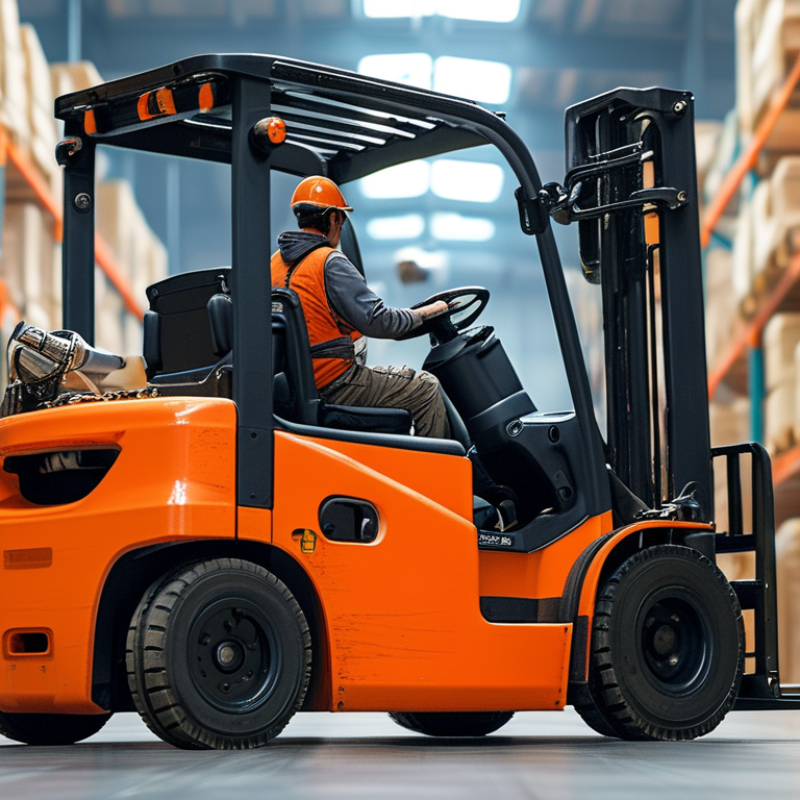
Understanding Your Warehouse's Specific Needs
Understanding your warehouse's specific needs is crucial when selecting the right forklift. Each warehouse is unique, with different layouts and products. Assessing the size of your aisles and the height of your racks is necessary. If your warehouse has narrow spaces, a compact forklift can maneuver better. Wider aisles might accommodate larger models for heavier loads.
Think about the types of materials you handle. Are they bulky or fragile? Heavy pallets require robust forklifts, while lighter items might benefit from more agile options. Consider the terrain too. Smooth floors allow for standard forklifts, but uneven surfaces may require specialized models.
Communication with your team is vital. Employees can share insights about daily operations and equipment challenges. Observing real-time usage helps you understand what works and doesn’t. Reflect on past experiences with various equipment. Sometimes a flashy forklift isn’t the best choice. It all comes down to practicality. Choosing the right forklift is about meeting your warehouse's real needs, not just trends.
Top 5 Tips for Choosing the Right Forklift for Your Warehouse
Understanding the specific needs of your warehouse is crucial in selecting the right forklift. Consider factors such as load capacity, lift height, maneuverability, energy efficiency, and overall cost to make an informed choice.
Evaluating Forklift Types and Their Applications
When evaluating forklift types for your warehouse, understanding their specific applications is crucial. According to the Forklift Manufacturers Association, over 100,000 forklifts are sold annually in the U.S. alone. Each type has unique strengths and weaknesses that align differently with various warehouse operations. For instance, electric forklifts are well-suited for indoor use due to their low emissions and quiet operation. However, they may not perform well on rough outdoor terrains.
Your decision should also consider weight capacity and height requirements. Standard forklifts typically handle 3,000 to 15,000 pounds. In contrast, narrow aisle forklifts excel in tight spaces but have limited lifting capacity. A miscalculation in weight capacity can lead to operational disruptions. It’s essential to analyze the layout of your warehouse as well. A poorly chosen forklift could lead to inefficiencies and safety hazards.
Furthermore, don't overlook the importance of maintenance. A study from the Material Handling Industry suggests that 25% of forklifts require repairs that could have been prevented. Ensuring that you choose the right type reduces maintenance costs. A deeper understanding of each type's application helps avoid unnecessary expenses and increases productivity in your warehouse. Choosing the right forklift is not just about immediate needs; it's about long-term efficiency and safety.
Assessing Load Capacity and Weight Handling Requirements
Choosing the right forklift requires careful consideration of load capacity and weight handling. Many warehouses use forklifts daily, making this aspect critical. Begin by analyzing the heaviest items you move. You’ll want a forklift that can easily handle those loads. If your warehouse deals with varying load sizes, ensure the forklift can manage the heaviest weights reliably.
Load capacity varies between forklift models. Standard capacities often range from 3,000 to 5,000 pounds, but many needs exceed that range. Assess the weights of pallets and machinery to avoid overloading. Utilize specifications provided by manufacturers as a baseline. If you're in doubt, consult with warehouse specialists or experienced operators. Their insights become invaluable when navigating these decisions.
Think about the potential for growth in your operations. If expansion is likely, investing in a forklift with a higher capacity could save you from future upgrades. Balancing immediate needs with future growth is essential. Additionally, consider the stability and maneuverability of the forklift with heavy loads. Poor weight distribution can lead to tipping or accidents in a busy warehouse environment.
Top 5 Tips for Choosing the Right Forklift for Your Warehouse
| Load Capacity (lbs) |
Forklift Type |
Weight Handling Requirements (lbs) |
Ideal Environment |
| 3,000 |
Electric Forklift |
2,500 - 3,000 |
Indoor |
| 5,000 |
Internal Combustion Forklift |
4,000 - 5,000 |
Outdoor |
| 6,000 |
Narrow Aisle Forklift |
5,000 - 6,000 |
Indoor |
| 8,000 |
Heavy-Duty Forklift |
6,000 - 8,000 |
Outdoor |
| 12,000 |
Container Forklift |
10,000 - 12,000 |
Ports/Outdoor |
Considering Space Constraints and Maneuverability
Choosing the right forklift is crucial for optimizing warehouse operations. When considering space constraints and maneuverability, it's essential to assess your warehouse layout. Aisle width can dictate which type of forklift will operate efficiently. Narrow aisles can limit options. A compact forklift may fit better, but check its load capacity.
Maneuverability also plays a significant role. Knowing the turning radius of your forklift can save time and enhance safety. Consider how much space you have for turning. If your warehouse has many tight corners, a more agile lift is necessary. It's frustrating when equipment can't navigate properly, leading to delays and accidents.
Think about your cargo types as well. Different forklifts have various capabilities. Some are designed for heavier loads, while others excel in speed. Balancing weight and speed is vital. You may need to reevaluate your choice if the forklift struggles with frequent loads. Your decision impacts daily operations, so consider all factors carefully.
Prioritizing Safety Features and Operator Comfort
Choosing the right forklift for your warehouse goes beyond mere functionality; it heavily involves prioritizing
safety features and operator comfort.
According to the Occupational Safety and Health Administration (OSHA), over
20,000 forklift-related injuries occur annually in the U.S. alone. Thus, ensuring
that operators are safe while working becomes a critical factor. Look for forklifts equipped with features
like stability systems, enhanced visibility, and ergonomic controls.
Operator comfort is equally important. A study by the National Institute for Occupational Safety and Health (NIOSH) shows that comfortable operators are
25% more productive and have fewer accidents. Prioritizing adjustable seats and user-friendly controls can significantly enhance comfort.
Small adjustments, such as seat height or steering wheel position, can lead to better posture and reduced fatigue during long shifts.
However, not every feature will work for every warehouse setup. Each facility has unique requirements. Some operators may struggle with complex control systems,
which could lead to improper use. It's vital to balance advanced technology with usability. Reflecting on these elements can help make a more informed choice for your warehouse,
focusing on both safety and operator satisfaction.
FAQS
: Analyze the heaviest items in your warehouse. Choose a forklift that can handle those loads easily.
Standard capacities usually range from 3,000 to 5,000 pounds. Consult specifications from manufacturers for specific details.
Planning for expansion can save you from future upgrades. A higher-capacity forklift can accommodate increased needs.
Aisle width limits options. Compact forklifts fit better in narrow spaces but must still meet load capacity requirements.
Consider the turning radius of the forklift. Space for turning is crucial, especially in tight corners.
Safety features like stability systems and visibility enhance operator security. Over 20,000 forklift injuries happen annually.
Comfortable operators tend to be 25% more productive. Adjustable seats and user-friendly controls can reduce fatigue.
Complex control systems may confuse operators. Balancing technology with usability is critical for effective use.
Poor weight distribution can lead to tipping or accidents. It’s essential to consider stability while handling heavy loads.
Reevaluate your choice. Weight and speed balance is vital for daily operations. Consider other forklift options if necessary.
Conclusion
When considering how to choose the right forklift for a warehouse, it is essential to first understand the specific needs of the facility. This includes evaluating the types of goods being handled and their respective storage requirements. Next, assessing forklift types and their applications will help narrow down options based on the tasks at hand, be it lifting, stacking, or transporting items.
Furthermore, load capacity and weight handling requirements are crucial factors to consider, ensuring that the chosen forklift can efficiently manage the goods without compromising safety. Additionally, space constraints and maneuverability play a key role, especially in warehouses with narrow aisles or limited room for movement. Lastly, prioritizing safety features and operator comfort is vital to enhance productivity and ensure a safe working environment. By following these guidelines, one can make an informed decision on selecting the appropriate forklift for their warehouse needs.

 Nauti Lift