In 2026, logistics safety depends on practical controls, reliable data, and disciplined daily habits. Warehouses are moving faster, with autonomous equipment, tighter delivery windows, and more complex inventory systems. These changes can improve productivity, but they also create new points of failure. A rushed pedestrian crossing, an obstructed aisle, or a poorly maintained pallet jack can cause serious harm within seconds.
This guide explains how to reduce accidents in logistics environments through clear procedures, safer facility design, and continuous worker involvement. Effective safety programs begin with accurate risk assessments. They also rely on trained supervisors, visible floor markings, equipment inspections, and realistic emergency drills. A loading dock should not depend on memory alone. Signals, barriers, lighting, and communication tools must support every worker, especially during busy shifts or poor weather.
Technology can help, but it cannot replace judgment. Cameras may identify unsafe traffic patterns, while wearable devices can reveal fatigue or repeated exposure to hazards. However, data can be misunderstood, ignored, or collected without meaningful follow-up. That weakness deserves attention. Experienced managers should compare incident reports with near-miss observations and employee feedback. Small details matter, such as a loose stretch-wrap strip near a conveyor or a warning light hidden by stacked cartons. Safer logistics environments are built through repeated corrections, honest reporting, and leadership that treats production pressure as a safety issue, not an excuse.
Understanding accident risks in logistics environments begins with the work itself. Workers move near forklifts, loading docks, conveyors, racks, and reversing vehicles. In 2023, the U.S. Bureau of Labor Statistics recorded 1,495 fatal injuries among transportation and material-moving occupations. That figure shows the scale of exposure, although it does not explain every warehouse incident. A quiet aisle can still hide danger.
Vehicle-pedestrian contact remains a serious risk. Blind corners, poor lighting, rushed picking, and unclear floor markings often combine. Falls also occur when workers climb racks, step from dock edges, or use damaged platforms. OSHA reports that powered industrial trucks cause about 85 workplace deaths and 34,900 serious injuries each year. These figures are widely cited, but older estimates should be reviewed carefully. Conditions change.
Tips: Separate walking routes from vehicle lanes. Use physical barriers where possible. Mark dock edges clearly. Check mirrors, alarms, and brakes before each shift. Keep three points of contact on steps. Supervisors should observe real behavior, not only signed checklists. A worker may report “no issue” while quietly skipping a control to meet a target. That gap matters. Near-miss records, shift timing, fatigue, weather, and workload can reveal patterns that injury statistics miss. Safety reviews should include temporary workers and new equipment. Perfect compliance is unlikely. Continuous correction is more realistic.
Understanding Accident Risks in Logistics Environments
Transportation incidents were the largest category of fatal occupational injuries in 2023, followed by contact with objects and equipment, falls, and violence. Logistics operators can reduce exposure by strengthening vehicle-pedestrian separation, dock and loading controls, powered-equipment training, fall prevention, and site security procedures.
Source: U.S. Bureau of Labor Statistics, Census of Fatal Occupational Injuries, 2023. The data covers all U.S. industries and is presented as a logistics risk benchmark.
How to Reduce Accidents in Logistics Environments in 2026?
Assessing hazards across warehousing and transportation operations requires more than counting injuries. It requires observing how work actually happens. The U.S. Bureau of Labor Statistics reported 1,495 fatal injuries among transportation and material-moving workers in 2023. The World Health Organization also estimates 1.19 million annual road deaths worldwide. These figures show that loading docks, warehouse aisles, and public roads form one connected risk system.
In warehouses, assess blind corners, reversing vehicles, unstable pallets, manual lifting, and rushed picking. A simple walk-through can reveal damaged floor markings or blocked emergency routes. In transportation, review driver fatigue, delivery-site access, weather exposure, and load-shift risks. The International Labour Organization identifies long hours, poor vehicle maintenance, and weak safety management as serious occupational road-risk factors. Still, a checklist may look complete while a dangerous shortcut remains invisible. That is where worker interviews matter.
Tips: Separate pedestrians from vehicles with physical barriers where possible. Use speed controls, lighting, and reversing alarms. Check loading equipment before each shift. Record near misses, not only injuries. Compare incidents by time, route, task, and workload. Small patterns often expose larger failures. The U.S. National Institute for Occupational Safety and Health recommends combining engineering controls, training, and administrative measures. Training alone is not enough. Review controls after layout changes, seasonal peaks, and new delivery schedules. Mistakes will still occur; the system should prevent one mistake from becoming a serious injury.
| Operational Area | Primary Hazard | Leading Risk Indicator | 2025 Baseline | 2026 Target | Recommended Control | Priority |
|---|---|---|---|---|---|---|
| Warehousing | Forklift and pedestrian collision | Vehicle–pedestrian proximity alerts | 18 events per 100,000 working hours | ≤10 events | Separate travel lanes, physical barriers, speed controls, high-visibility walkways, and proximity detection. | Critical |
| Warehousing | Falls from loading docks | Unprotected dock edges and open doors | 7 incidents per 1,000 dock-hours | ≤3 incidents | Install dock gates, wheel chocks, vehicle-restraint systems, edge markings, and pre-use inspections. | Critical |
| Warehousing | Manual handling and musculoskeletal strain | High-frequency lifts above 15 kg | 32% of reported injuries | ≤22% | Use lift-assist equipment, adjustable workstations, team-lift rules, job rotation, and ergonomic assessments. | High |
| Warehousing | Falling objects and rack collapse | Damaged uprights or overloaded beams | 9.4% of monthly rack inspections | ≤4% | Apply rated load signage, rack protection, weekly inspections, quarantine procedures, and prompt repairs. | Critical |
| Warehousing | Slips, trips, and same-level falls | Housekeeping defects per inspection | 14 defects per inspection | ≤6 defects | Set aisle-clearance standards, repair floor damage, improve drainage and lighting, and use rapid spill response. | High |
| Transportation | Driver fatigue and reduced alertness | Hours without a compliant rest break | 6.8% of driving shifts | ≤3% | Use fatigue-risk scheduling, legally compliant driving limits, rest planning, and confidential fatigue reporting. | Critical |
| Transportation | Vehicle collision during delivery | Harsh-braking and speeding events | 4.2 events per 10,000 km | ≤2.5 events | Apply defensive-driving training, speed governance, route-risk reviews, vehicle inspections, and coaching based on telematics. | Critical |
| Transportation | Unsafe loading and cargo shift | Load-securing nonconformities | 5.6% of load inspections | ≤2% | Standardize load plans, inspect restraints, verify weight distribution, and require release checks before departure. | Critical |
| Transportation | Reversing and yard movements | Reversing events without a spotter | 11 events per 100,000 movements | ≤5 events | Adopt a forward-driving yard layout, marked exclusion zones, reversing cameras, alarms, and trained spotters. | Critical |
| Cross-functional | Inadequate incident learning | Corrective actions overdue by more than 30 days | 21% of actions | ≤8% | Use root-cause analysis, action owners, due-date escalation, monthly trend reviews, and near-miss reporting. | High |
In 2026, safer logistics operations will depend on coordinated equipment, facility, and traffic controls. Every forklift, pallet jack, and conveyor should receive documented inspections before use. Operators need practical training, not only online instructions. A damaged wheel or weak warning light can create danger within seconds. Equipment speed should match floor conditions, load weight, and pedestrian activity.
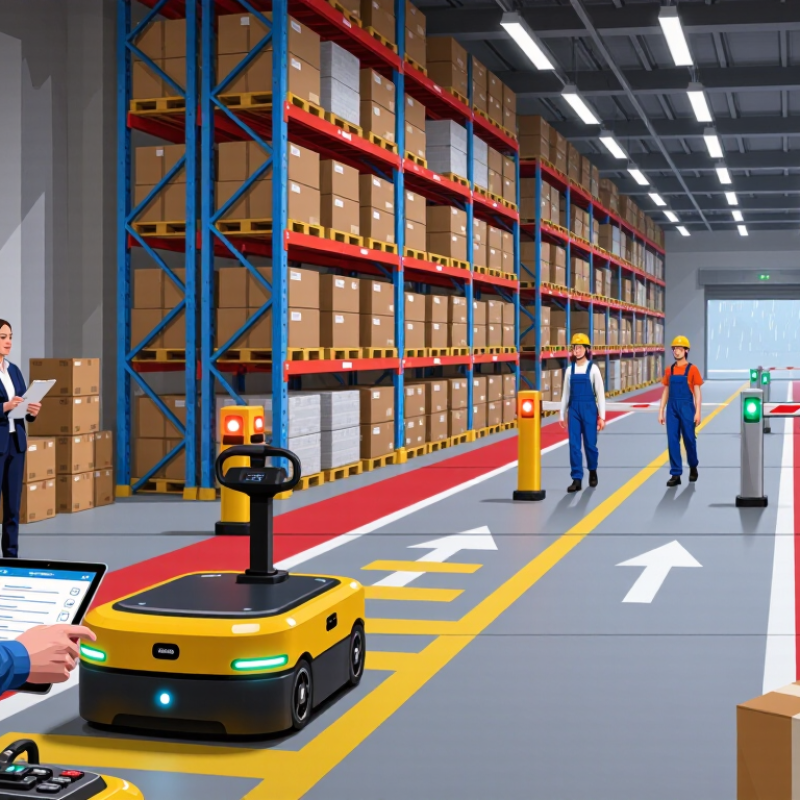
Facility design also shapes daily behavior. Mark pedestrian lanes with clear, durable lines. Install guardrails near loading edges and separate walking routes from vehicle routes. Keep emergency exits visible and free from stored materials. Lighting should reveal shrink wrap, broken pallets, and wet patches. Supervisors should review near misses each week. One weak point remains common: signs are installed, but nobody checks whether workers can see them during busy shifts.
Tips: Use one-way vehicle routes where possible. Place convex mirrors at blind corners. Require seat belts and visible high-visibility clothing. Keep loads below the driver’s sightline. Test alarms during scheduled inspections. Ask workers where traffic feels unsafe; their experience often reveals problems that floor plans miss. Record corrective actions with an owner and deadline. Small delays are acceptable. Unclear responsibility is not. Review the controls after layout changes, seasonal volume increases, or an incident. Some procedures may look complete on paper, yet fail beside a crowded dock. Recheck them there.
How to Reduce Accidents in Logistics Environments in 2026?
Strengthening Worker Training, Communication, and Safety Culture
Logistics accidents often begin with ordinary pressure: a late delivery, a blocked aisle, or a rushed handover. Training must reflect these real conditions. Qualified trainers should demonstrate safe lifting, vehicle separation, load stability, and emergency responses on the actual work floor. Workers learn more effectively when they practice beside storage racks, loading bays, and moving equipment. Keep sessions short and repeat them often. At shift start, supervisors can review one current hazard using a photo or simple floor sketch. Record practical competence, not attendance alone.
Communication must continue after training ends. Clear pedestrian routes, visible signs, and consistent radio language reduce confusion during busy periods. Workers should report near misses without fear of punishment. A loose pallet or damaged floor may seem minor, but it can reveal a larger control failure. Small signals matter. Managers need to review reports, assign corrective actions, and confirm completion personally. Silence is data, too.
Safety culture becomes credible through daily behavior. Supervisors should stop unsafe work respectfully, even when schedules are tight. Experienced workers can coach new colleagues, while new workers may notice risks that veterans overlook. Our first plan may fail if it ignores fatigue, language differences, or seasonal staffing. That failure deserves honest review. Monthly observations, worker feedback, and incident trends can guide better decisions, although no checklist replaces attention at the point of risk.
Accident prevention in 2026 depends on measurement, not confident impressions. The U.S. Bureau of Labor Statistics recorded 1,495 fatal injuries in transportation and material-moving occupations in 2023. That figure keeps daily controls in focus. In a busy loading bay, monitor near misses, reversing alarms, pedestrian-vehicle separation, damaged pallets, and rushed handovers. A shift-level dashboard should compare these signals with overtime, temporary staffing, congestion, and training completion. Numbers need context.
Use leading indicators weekly, then test them against injuries and restricted-work cases. The International Labour Organization reported 2.93 million work-related deaths and 395 million non-fatal injuries globally in its 2024 estimates. These estimates show why local data cannot stand alone.
Supervisors should review trends during toolbox talks, assign one owner, and close corrective actions with photos and dates. Independent audits can challenge normalised shortcuts. Still, dashboards are imperfect. A near miss may reflect reporting trust, not safer work. That weakness deserves discussion.
Tips:
Check blind corners, reversing vehicles, unstable pallets, manual lifting, blocked exits, and damaged floor markings. Small defects matter.
Use physical barriers, marked walkways, controlled crossings, lighting, speed limits, and reversing alarms. Do not rely on attention alone.
Near misses reveal weak controls before someone gets hurt. Record the task, location, time, route, and workload. A quiet report may mean silence, not safety.
Training should demonstrate lifting, load stability, vehicle separation, and emergency responses on the actual work floor. Short sessions work better. Repeat them often.
Use clear signs, visible pedestrian routes, and consistent radio language. Review one current hazard at each shift start. A photo can help.
Review driver fatigue, long hours, poor vehicle maintenance, weather exposure, delivery-site access, and shifting loads. A late delivery can create dangerous pressure.
Track near misses, blocked routes, damaged pallets, reversing alarms, rushed handovers, overtime, and temporary staffing. Compare trends by shift and task. Numbers need context.
Stop unsafe work respectfully, assign one corrective-action owner, and confirm completion with dated photographs. The first plan may fail. Review it honestly.
Reducing accidents in logistics environments in 2026 requires a coordinated approach that addresses risks across warehouses, loading areas, roads, and delivery operations. The process begins with identifying hazards such as vehicle and pedestrian conflicts, unstable loads, poor visibility, manual handling injuries, fatigue, and inadequate facility maintenance. Organizations can then reduce exposure by improving traffic routes, separating moving equipment from foot traffic, maintaining clear workspaces, using safer handling equipment, and applying effective lighting, signage, alarms, and protective barriers.
A strong safety culture is equally important. Workers should receive practical, role-specific training, regular refreshers, and clear communication about changing conditions and near misses. Managers should encourage employees to report hazards without fear and respond quickly with corrective action. To understand how to reduce accidents in logistics environments, companies should track incidents, near misses, inspections, training completion, and corrective actions. Reviewing this information regularly helps identify patterns, measure progress, and continuously improve safety procedures throughout 2026.

Nauti Lift