7 Best Factors Affecting Industrial Equipment Lifespan

Time:2026-09-18 Author:Aria
0%

Industrial equipment rarely reaches the end of its useful life for one simple reason. A neglected bearing, unstable temperature, poor lubrication, or repeated overload can quietly shorten its working years. Understanding what affects the lifespan of industrial equipment requires more than reading a manufacturer’s specification sheet. It requires observing machines under real production pressure.

John Moubray, a respected maintenance and reliability expert, wrote, “Maintenance means ensuring that physical assets continue to do what their users want them to do.” That principle remains highly practical. A compressor operating beside dust-producing machinery faces different risks from one installed in a clean, climate-controlled room. The same model can perform very differently because of workload, maintenance discipline, operator habits, and environmental conditions.

Small warning signs matter.

A hot motor casing, unusual vibration, darkened oil, or a minor leak may indicate developing damage. In my experience, these details are often dismissed because production targets feel more urgent. That decision can become expensive. Still, maintenance schedules are not perfect, and even careful teams can miss hidden fatigue, design weaknesses, or changing operating conditions.

This guide examines seven major factors affecting industrial equipment lifespan, including maintenance quality, load management, installation accuracy, operating environment, lubrication, technology, and workforce training. It also considers how monitoring tools and maintenance records support better decisions. Equipment does not fail only because it is old. Sometimes, it fails because its working conditions changed while the maintenance plan stayed the same.
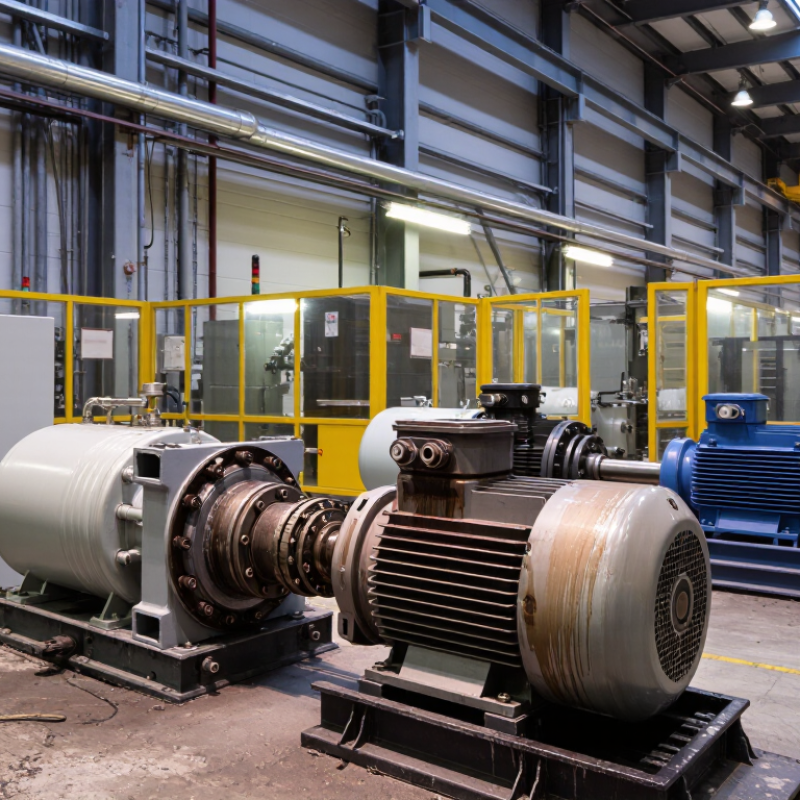
7 Best Factors Affecting Industrial Equipment Lifespan

Defining Industrial Equipment Lifespan and Its Importance

Industrial equipment lifespan is the period a machine delivers safe, useful performance under defined conditions. It is not simply the date of final breakdown. A pump may still run while vibration, leakage, and energy use reveal declining health. Service life depends on workload, maintenance quality, installation accuracy, operating habits, environmental exposure, material wear, and technology changes. A press working near its rated load ages differently from one running occasional light cycles. Heat, dust, moisture, and corrosive chemicals can shorten life quietly.

Defining lifespan matters because it turns vague aging into a planning decision. Reliable records help engineers estimate remaining useful life, schedule inspections, and budget replacement parts. They also support safer production by identifying when guards, bearings, seals, or control systems need attention. In field assessments, I would compare technical data with actual hours, temperature readings, noise, and repair history. Numbers alone can mislead. A clean machine may hide poor alignment, while an old machine may remain dependable after careful rebuilding. My own judgment can be wrong when records are incomplete. That uncertainty should be documented, not ignored. Operators should report unusual smells, rising power consumption, or repeated stoppages early. Small clues often become expensive failures. Lifespan is a measured range, not a promise, and its value depends on honest evidence.

Assessing Equipment Design, Materials, and Manufacturing Quality

Industrial equipment lifespan starts on the drawing board. A strong design controls load paths, vibration, heat, contamination, and maintenance access. Sharp corners can concentrate stress. Poorly placed seals may trap moisture around bearings. Field inspections often reveal this gap: the machine meets its rated load, but not the plant’s dust, temperature, or cleaning routine.

Material selection matters just as much. The IMPACT study by NACE estimated global corrosion costs at about $2.5 trillion annually, equal to 3.4% of global GDP. Protective coatings, compatible alloys, drainage points, and corrosion allowances can reduce that exposure. However, stronger material is not always better. A hard component may resist wear but fail suddenly under impact. Design engineers should compare fatigue strength, chemical resistance, thermal expansion, and repairability.

Manufacturing quality turns good design into reliable equipment. Dimensional accuracy, weld integrity, surface finish, balancing, and heat treatment influence early failures. A small alignment error can create continuous bearing vibration. The U.S. Department of Energy’s Operations and Maintenance Best Practices Guide reports potential savings of 8–12% from predictive maintenance over preventive maintenance, and 30–40% over reactive maintenance. That data supports earlier condition checks, but it does not replace quality control. One uncomfortable lesson remains: inspection records can look complete while hiding inconsistent measurement methods. Calibration discipline needs equal attention.

Examining Operating Conditions, Workload, and Usage Patterns

7 Best Factors Affecting Industrial Equipment Lifespan

Operating conditions often matter more than the equipment’s purchase date. Heat, dust, moisture, vibration, and poor ventilation accelerate wear on bearings, seals, and electrical insulation. A pump running beside a hot furnace may show rising vibration before visible damage appears. The U.S. Department of Energy’s Operations & Maintenance Best Practices guide reports that predictive maintenance can reduce maintenance costs by 8–12% compared with preventive maintenance. However, temperature readings alone cannot explain every failure.

Workload and usage patterns create different stresses. Frequent starts and stops can damage motors faster than steady operation. A conveyor carrying heavy loads for twelve hours daily needs different inspections than one used occasionally. Plant Engineering’s 2023 Maintenance Report found that 82% of facilities experienced unplanned downtime during the previous three years. Its reported average reached about 25 hours. That is expensive. Operators sometimes assume rated capacity means safe continuous operation. That assumption fails.

Tips: Record load, runtime, start cycles, temperature, and vibration weekly. Compare readings with the manufacturer’s operating range. Inspect equipment after unusual noise, repeated overloads, or long idle periods. Use the data to adjust inspection frequency, not merely to complete a checklist. No checklist is perfect. A clean log can still miss changing production conditions. Review the records with technicians and operators who understand the machine’s daily behavior.

Evaluating Maintenance Practices, Inspections, and Repairs

7 Best Factors Affecting Industrial Equipment Lifespan

Evaluating Maintenance Practices, Inspections, and Repairs

Industrial equipment lasts longer when maintenance follows real operating conditions, not a fixed calendar alone. The key factors include lubrication, alignment, load, temperature, cleanliness, inspection quality, and repair workmanship. A clean filter and correct lubricant can prevent a minor fault from damaging a bearing. The U.S. Department of Energy’s Operations & Maintenance Best Practices Guide reports that preventive maintenance may reduce costs by 12–18% compared with reactive maintenance. That figure is useful, but not universal.

Inspection routines should combine visual checks, measurements, and condition monitoring. Technicians can detect vibration, heat, pressure loss, loose fasteners, and unusual noise before failure occurs. McKinsey’s predictive maintenance analysis estimates 30–50% less downtime and 10–40% lower maintenance costs in suitable operations. Sensors help. Human judgment still matters. A dashboard cannot confirm a cracked bracket by touch. We sometimes trust alarms too much.

Repair quality decides whether equipment truly recovers. Teams should record the failure mode, alignment readings, torque values, replaced parts, and test results. A rushed repair may restart production but shorten the next service interval. Root-cause analysis can reveal overload, poor lubrication, contamination, or incorrect installation. ISO 55001 principles also support linking maintenance decisions with asset risk, performance, and lifecycle value. Records are not paperwork alone; they expose repeated mistakes. Sometimes, the maintenance plan needs revision.

Understanding Technology, Operator Skills, and Replacement Planning

Industrial equipment lifespan depends on more than steel strength or purchase price. Technology, operator skills, and replacement planning often decide how long equipment performs reliably. Sensors can track vibration, temperature, pressure, and energy use. These readings reveal bearing wear before a loud failure occurs. However, data is not automatically useful. Poor calibration or neglected software updates can create false confidence.

Skilled operators notice small changes during routine work. A pump may sound sharper, heat unevenly, or require extra adjustment. Training should explain these signals, not only operating buttons. Clear procedures reduce overload, incorrect settings, and rushed start-ups. Operators also need authority to stop questionable equipment safely. That practical judgment is valuable. Still, even experienced teams miss problems during busy shifts. Regular inspections and documented handovers help close that gap.

Replacement planning should begin before equipment becomes unreliable. Maintenance records can show rising repair costs, longer downtime, and unavailable spare parts. A simple spreadsheet can compare those costs with a planned replacement budget. New technology may improve efficiency, but compatibility and staff training require attention. Replacing one machine too early can waste capital. Replacing it too late can disrupt production. A staged plan, supported by inspection reports and supplier-neutral technical advice, allows managers to prepare installation space, training time, and critical spare components. Plans can be wrong. Review them after every major repair.

7 Best Factors Affecting Industrial Equipment Lifespan

Relative priority scores for lifespan planning based on common reliability-engineering practices. The scores are planning indicators, not measured percentages of service-life extension.

FAQS

How does equipment design affect its lifespan?

Good design controls loads, vibration, heat, contamination, and maintenance access. Sharp corners can concentrate stress. Poor seal placement may trap moisture near bearings.

Why do operating conditions matter during design?

Rated capacity alone is not enough. Dust, high temperatures, cleaning routines, and chemical exposure can shorten service life. A machine may pass the drawing review yet struggle on the plant floor.

How should materials be selected for industrial equipment?

Engineers should compare fatigue strength, corrosion resistance, thermal expansion, wear, and repairability. Stronger is not always safer. A very hard part may crack suddenly under impact.

What helps reduce corrosion damage?

Compatible alloys, protective coatings, drainage points, and corrosion allowances provide practical protection. Water must have somewhere to go. Trapped moisture can attack bearings and joints.

Which manufacturing details influence early failures?

Dimensional accuracy, weld quality, surface finish, balancing, and heat treatment strongly affect reliability. A small alignment error can create constant bearing vibration. Tiny errors matter.

How can maintenance improve equipment lifespan?

Use operating conditions, not a calendar alone, to guide maintenance. Correct lubricant, clean filters, alignment, and suitable loads prevent avoidable damage.

What should inspections include?

Combine visual checks, measurements, and condition monitoring. Look for unusual vibration, heat, pressure loss, loose fasteners, and noise. Sensors help. They do not replace judgment.

What makes a repair reliable?

Record the failure mode, alignment readings, torque values, replaced parts, and test results. A quick restart may hide a weak repair. Root-cause analysis can reveal overload, contamination, poor lubrication, or incorrect installation.

Why are calibration and maintenance records important?

Complete-looking records may still contain inconsistent measurements. Calibration discipline gives inspection data greater credibility. Records expose repeated mistakes. Sometimes, the maintenance plan needs revision.

Conclusion

Industrial equipment lifespan refers to the period during which a machine can operate safely, reliably, and productively before replacement becomes necessary. Understanding what affects the lifespan of industrial equipment helps organizations improve efficiency, control costs, and reduce unexpected downtime. Key factors begin with equipment design, material strength, manufacturing precision, and overall construction quality, all of which influence durability under demanding conditions.

Operating temperature, humidity, dust, vibration, workload, and usage frequency can accelerate wear when they exceed intended limits. Regular maintenance, timely inspections, proper lubrication, and professional repairs are equally important for preventing small problems from becoming major failures. In addition, modern monitoring technology can identify performance changes early, while well-trained operators support correct and careful use. Finally, organizations should plan for component replacement, upgrades, and eventual equipment renewal based on service history, operating demands, and changing production needs. A balanced approach to these areas can extend useful life, improve safety, and maintain consistent performance.

Aria

Aria

Aria is a dedicated marketing professional with a deep passion for innovative strategies and a keen understanding of our company's product offerings. With a wealth of experience in the industry, Aria excels at crafting engaging content that highlights the unique features and benefits of our......